
Moto Rider, Bike Racing Game
iKame Games - Zego StudioRacing
4.5874.00 Reviews
- Version
- 1.148
- Installs
- 100.00M
- Age Rating
- Everyone
Screenshots
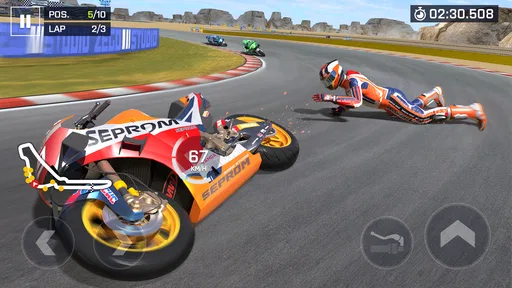
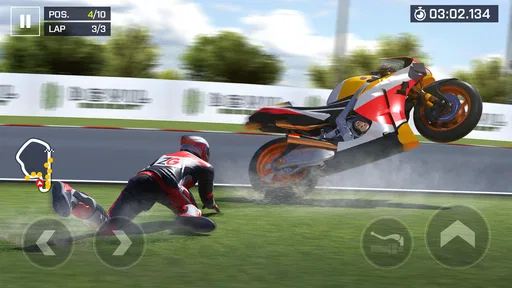
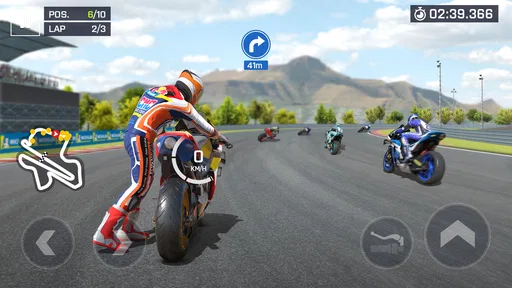
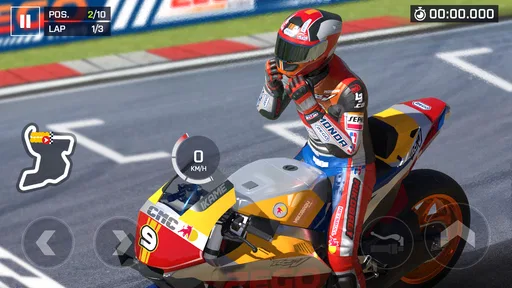
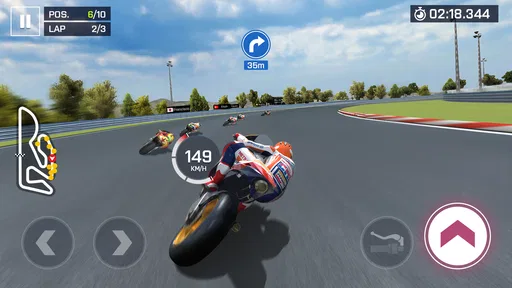
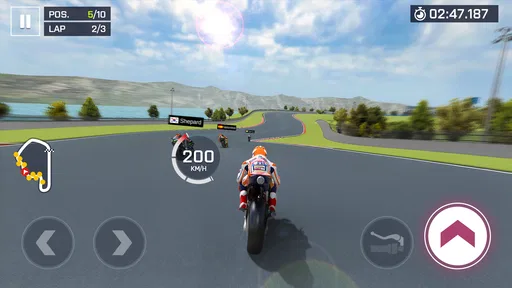
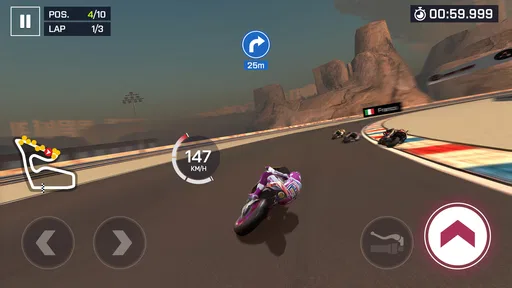
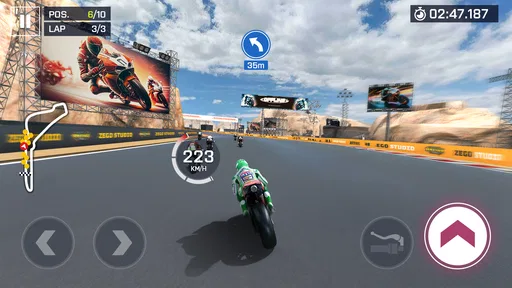
Our Review of Moto Rider, Bike Racing Game
 Analysis by Appyee
I treat Moto Rider as a quick-hit arcade racer rather than a motorcycle simulation. Its appeal is the immediate rush of weaving through traffic, not the promise of painstakingly realistic riding. That distinction matters: if I have a few spare minutes and want a game that gets to the action quickly, this style can be a good fit. If I want careful track strategy, licensed machinery, or a demanding simulation, I would look elsewhere.
What “fast” feels like here
The speed comes through in the close passes and the pressure to react as traffic fills the road. I found that the sensation depends as much on keeping a clean line as on chasing a higher top speed: a small steering correction can be the difference between slipping past a vehicle and losing a run. That makes the game feel lively without requiring a long warm-up, though it is an arcade impression rather than a measure of real-world motorcycle performance.
For a more comfortable first session, I would try both steering options before settling in. Tilt steering can feel natural once your hands find a consistent angle, but it also makes the phone’s position part of the control scheme. On-screen buttons are a sensible alternative if you are playing with the device resting on a desk or prefer not to move it around. I would avoid changing methods in the middle of a focused run; learning one setup first makes it easier to judge whether a mistake came from my timing or my inputs.
When a short session turns demanding
The traffic-weaving format is easy to understand but becomes less forgiving when I am trying to maintain pace and make repeated close decisions. That is where a casual round can turn into a concentration test. I would play with enough attention to watch the road, rather than treating it as a background distraction while doing something else. It is especially suited to a break when you can give the screen your focus for a few minutes, not to moments when you need to keep looking away.
One practical way to keep the game enjoyable is to treat each run as a chance to learn a little, rather than expecting every attempt to be a perfect score. If I keep clipping traffic, I can slow my decisions down and prioritize a safe path instead of forcing a risky pass. That small change of goal helps separate the fun of the ride from the frustration of chasing a result. The game’s race and mission variety, as described in the original review, also gives players different ways to engage rather than making every session feel like the same challenge.
Reliability, patience, and recovery
I would think about reliability in everyday terms: a racing game is most useful when I can open it, get into a run, and enjoy the time I have without needing a complicated setup. The straightforward menu and accessible controls described here support that pick-up-and-play role. Still, a fast arcade game asks for quick reactions, so a momentary distraction or an awkward grip can affect a run more than it would in a slower, turn-based game.
When a run goes badly, the useful response is usually to reset my focus, not to make a string of panicked steering corrections. I would also keep expectations sensible around progress: bike upgrades and new rides give coins a purpose, but choosing an upgrade is a trade-off, not a guaranteed shortcut to better results. Before spending, I would decide whether I want a change in speed or a more manageable ride, then stick with that choice long enough to tell whether it suits my habits.
Who will enjoy this kind of ride
This game makes the most sense for someone who likes quick arcade racing, traffic dodging, and the small satisfaction of improving a run. It can also suit a casual player who wants more immediate action than a slow career mode offers. I would be less likely to recommend it to a player who wants deep bike setup, realistic handling, or a strictly competition-focused experience; those priorities call for a more simulation-oriented or track-racing alternative.
There is a useful middle ground for players who are unsure. Try a short session with the default approach before investing much time in upgrades. If the near-misses and quick steering decisions are the fun part, the game’s format is probably working for you. If what you want is careful cornering and long-form progression, the arcade emphasis may feel repetitive instead of exciting. That is not a flaw for every player, but it is a meaningful difference from racing games built around circuits and detailed vehicle tuning.
For an everyday example, I would pick it up while waiting for a coffee or winding down after work, when I can focus on one quick run and stop without needing to remember a complicated plan. I would not start a session while walking, riding as a passenger in a situation that needs attention, or doing anything where the screen competes with real-world awareness. The close traffic and quick reactions reward focused play, so the best “casual” use is a brief, deliberate break.
First Impressions Matter
From the moment I fired up Moto Rider, I was greeted with sleek graphics and a user-friendly interface. It’s clear that a lot of thought has gone into making the game visually appealing without overwhelming the player. The main menu is straightforward, offering quick access to different modes, settings, and of course, the garage where you can check out your collection of virtual bikes.
Gameplay and Mechanics
Now, let's talk about the gameplay. The controls in Moto Rider are intuitive, making it easy for both newbies and seasoned gamers to get a handle on things. You can tilt your device to steer or use on-screen buttons, whichever suits your style. I personally enjoyed the tilt feature as it felt more immersive. The game offers a variety of modes, including time trials, endless races, and challenging missions that keep things fresh and engaging.
What really hooked me was the feeling of speed as I zipped through traffic, narrowly avoiding cars and trucks. The game does a fantastic job of simulating the sensation of high-speed racing. Plus, the varied environments—from bustling city streets to serene countryside roads—add an extra layer of excitement.
The Need for Speed (and Customization)
One of the standout features of Moto Rider is the ability to customize and upgrade your bikes. Winning races earns you coins, which you can spend on upgrades or new bikes. I found myself constantly tweaking my ride, looking for that perfect balance between speed and handling. This feature adds a strategic element to the game, as you’ll need to decide whether to invest in a faster bike or enhance your existing one.
The game offers a wide array of bikes to choose from, each with unique stats and abilities. Whether you prefer a nimble sport bike or a powerful cruiser, there’s something here to satisfy every racing aficionado.
Sound and Graphics
No bike racing game is complete without a killer soundtrack, and Moto Rider delivers on this front. The music is upbeat and perfectly complements the high-octane action on screen. The sound effects are equally impressive, with the roar of engines and the whoosh of passing traffic adding to the immersion.
Visually, the game is a treat. The graphics are polished, with detailed environments and realistic lighting effects that enhance the overall experience. I was particularly impressed by the attention to detail in the bike models and the dynamic weather conditions that occasionally change the look and feel of a race.
How it fits on your phone
Because the action is built around fast reactions and traffic gaps, screen comfort matters more than it might in a puzzle game. I would hold the phone in a way that leaves both steering and the road clearly visible; if the button layout feels cramped, tilt control may be the easier option, while a steady surface can make buttons more practical. These are small choices, but they can reduce avoidable mistakes and make a short session feel less tiring.
On device demands, I would keep the judgement modest. The visuals described above are part of the attraction, but polished scenery does not by itself tell me how the game will behave on every phone. If you are using an older device, closing other demanding apps before a session is a low-effort way to give the game a fair try. If performance feels uneven, lowering expectations for a flawless run is wiser than blaming every missed pass on control skill.
The game is free to start, with optional in-app purchases priced from $1.99 to $99.99 per item. I would treat purchases as optional convenience or progression choices, not as a prerequisite for deciding whether the core riding feels good. Since the bike-upgrade loop is already a meaningful part of play, I would first spend time learning which handling style suits me, then consider whether any purchase offers something I genuinely want. The age rating is Everyone, and the game is developed by iKame Games - Zego Studio.
Choosing between this and other racers
Compared with the usual alternatives, Moto Rider sits closer to an accessible traffic arcade game than a track racer. A circuit-focused game is a better choice if you want to learn braking points, repeat the same corners, and compare lap times. A more simulation-heavy option is better if realistic weight, detailed setup, and deliberate riding are the main draw. Here, the quick decisions and near misses are the point, so I would choose it for immediacy rather than depth of vehicle modeling.
That comparison also helps answer whether it is worth trying if you are new to mobile racing. I think it is approachable because the controls are simple to understand, while the traffic still gives experienced players room to sharpen their reactions. The trade-off is that the format may feel less satisfying if you want every session to build toward a long campaign or a carefully structured championship. I would sample the different modes before deciding whether the variety is enough to keep me returning.
Version, audience, and overall performance
Moto Rider is a free racing game with an average rating of 4.5 from around 248,000 ratings, and it has passed 100 million installs. It was released on October 30, 2023, and the current version is 1.148. Its minimum operating-system requirement is Android 7.0. The store’s latest update note points to motor racing innovations, which fits the game’s focus on quick, energetic riding without changing the basic advice: choose it for arcade pace, not a promise of simulation-grade detail.
Those figures suggest that it has reached a broad audience, but popularity alone cannot settle whether it fits your taste. I would use the first few sessions to answer a more personal question: do I enjoy reacting to traffic and refining my ride, or do I want a structured track challenge? If the former sounds satisfying, the game has a clear role as a compact racing break. If not, choosing a circuit racer or a more realistic motorcycle game is likely to be a better use of your time.
Final Thoughts
All in all, Moto Rider is a fantastic addition to any racing fan’s collection. It’s easy to pick up but hard to put down, offering a thrilling ride that’s both challenging and rewarding. The combination of intuitive controls, stunning visuals, and a wide array of customization options makes it a standout in the crowded field of mobile racing games.
If you’re looking for a game that captures the thrill of motorcycle racing and offers endless entertainment, give Moto Rider a spin. Trust me, this app is worth every download.
Verdict
Strengths of Moto Rider, Bike Racing Game
- Stunning graphics enhance gameplay immersion.
- Multiple bikes and upgrades available.
- Realistic sound effects for a thrilling experience.
- Intuitive controls for smooth navigation.
- Regular updates with new features and challenges.
Limitations of Moto Rider, Bike Racing Game
- Contains in-app purchases that may be costly.
- Advertisements can interrupt gameplay.
- High graphics demand may drain battery.
- Requires stable internet for optimal performance.
- Limited customization options for characters.
Other Releases by iKame Games - Zego Studio
View All
Bike Race: Racing Games
Racing4.5

Car Race
Racing4.6

Monster Truck Stunt Racing
Racing3.3

Screwdom 3D
Puzzle4.6
Similar Picks in This Category
View All
Hill Climb Racing
Fingersoft4.3

Dr. Driving
SUD Inc.4.2

Traffic Rider
skgames4.5

Asphalt 8 - Car Racing Game
Gameloft SE4.6

Race Master 3D: Car Racing
Beresnev Games4.6

Extreme Car Driving Simulator
AxesInMotion Racing4.3
Frequently Asked Questions
What are the system requirements for Moto Rider on Android and iOS?
Moto Rider is designed to run smoothly on most modern devices. For Android users, the app requires at least Android 5.0 (Lollipop) or later, with a minimum of 2GB RAM for optimal performance. iOS users will need iOS 10.0 or later. Ensure you have sufficient storage space, as the game requires around 500MB.
Does Moto Rider require an internet connection to play?
Moto Rider can be enjoyed both online and offline. While you can play the game without an internet connection, an active connection is required to access certain features like leaderboards, daily challenges, and in-game purchases. Playing offline will limit these features, but the core gameplay remains intact.
Are there any in-game purchases or ads in Moto Rider?
Yes, Moto Rider includes in-game purchases and ads. Players can buy additional bikes, skins, and boosts to enhance their gameplay. Ads are present but can be removed through an in-app purchase. The game is free to download, but these purchases support the developers and unlock more features.
Can I customize my motorcycle in Moto Rider?
Absolutely! Moto Rider offers a variety of customization options to personalize your motorcycle. Players can change the color, upgrade parts, and apply unique skins. Customization not only enhances your bike's appearance but can also improve its performance, giving you a competitive edge in races.
What game modes are available in Moto Rider?
Moto Rider features several thrilling game modes, including Time Trial, Endless, and Multiplayer. Time Trial challenges players to beat the clock, while Endless mode tests your endurance in a non-stop ride. Multiplayer mode allows you to race against friends or global players, adding a competitive edge to your experience.
Play our best games!


